
Hurricane season in Florida runs from June 1 through November 30, and it overlaps with the busiest stretch of the moving calendar: summer lease turnovers, the start of the school year and the fall rush before the holidays. You don't have to put your move off until December. You just need a plan that leaves room for the weather.
Here is the checklist we share with customers moving in Orlando, Lake Mary, Sanford and the rest of Central Florida during the season.
When is the risk highest?
Storms can form at any point in the season, but activity usually peaks from mid-August through mid-October. Because Central Florida is inland, the everyday problem on moving day is more often heavy rain, afternoon thunderstorms and lightning than a direct hit. Still, a named storm near the state can crowd the roads and empty store shelves for days, so it pays to plan ahead.
1. Pick a flexible date and an early start
If you can, choose a moving date with a day or two of wiggle room on each side, especially between mid-August and mid-October. Book the earliest start you can get: summer storms in Central Florida tend to build in the afternoon, so a morning start gets most of the loading done while it's dry and cooler.
2. Know how weather changes are handled before you book
Ask any mover what happens if a storm forces a new date: is there a fee, and how soon can you rebook? Florida requires movers to give you a written estimate before the move. At EconSolutions, any deposit, cancellation or rescheduling terms are on that estimate, so you know how a weather change works before the forecast turns.
3. Check the flood and evacuation zone of your new address
Before you sign a lease or close on a home, look the address up on the FEMA Flood Map Service Center and on Florida's Know Your Zone tool. Inland doesn't mean flood-proof: neighborhoods near lakes and the St. Johns River can flood in heavy rain. Knowing your zone tells you whether you would need to leave during a storm.
4. Pack in waterproof plastic bins instead of cardboard
If you can, pack in waterproof plastic bins with lids instead of cardboard boxes. Cardboard soaks through in a Florida downpour and can crush at the bottom of a stack. Bins keep everything dry, so they can be carried to the truck in any weather.
They also make the move faster. Bins of the same size stack evenly and don't collapse, so the crew can carry them on a dolly and load them tall and tight in the truck. Since moving labor is billed by the hour, a faster load keeps your cost down. After the move, the bins are a good place to keep your storm supplies.
5. Protect your belongings from the rain
Florida rain can show up fast, even on a sunny morning. A good crew plans for it:
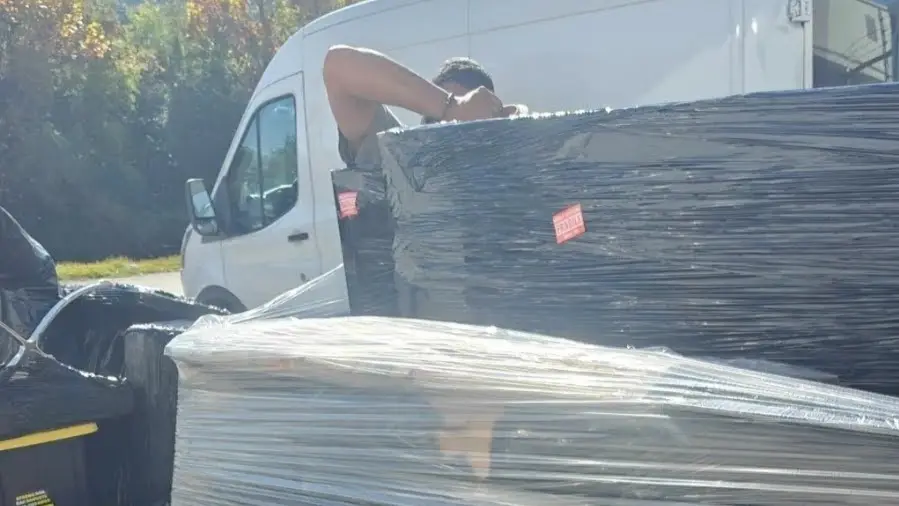
- Upholstered furniture and mattresses padded and shrink-wrapped before they leave the house.
- Floors and doorways covered so wet shoes and carts don't leave marks.
- The truck parked as close to the door as possible, so every trip in the open is short.
- Carrying stops when lightning is close and picks back up once it passes.
Padding, shrink-wrap and floor protection are part of our hourly rate. See what's included.
6. Don't pack your storm kit in the truck
Keep these with you, not in the truck
- Water and non-perishable food for several days
- Flashlights, batteries and charged phone power banks
- Prescriptions and a first-aid kit
- IDs, lease or closing papers and other important documents in a waterproof bag
- Some cash, in case card readers are down
- Pet food, leashes and carriers
It doubles as your first-night box in the new place.
7. Plan for fuel, generators and utilities
Movers generally can't transport gasoline, propane or anything with fuel in it, so empty generator and lawn mower tanks before moving day and handle fuel cans yourself. Fill up your car the day before. Set up power, water and internet at the new address a few days early, so a storm right after the move doesn't leave you in a dark house.
8. Photograph everything before moving day
Take photos or a quick video of your furniture and electronics before the crew arrives. It gives you a record of what you own and the condition it was in, which helps if anything is ever in question.
Moving in Central Florida this fall?
Our 2-mover crew is $129/hr, billed from when we arrive, with no travel fee. Call or text us your date and we'll help you plan around the forecast, or request a free quote.
Frequently asked questions
Is it safe to move during hurricane season in Florida?
Yes. Most days of the season are ordinary summer weather. Keep your date flexible, start early to stay ahead of afternoon storms, and follow the National Hurricane Center forecast in the days before your move. If a watch or warning covers your area, move the date.
What happens to my move if a hurricane is coming?
Safety comes first, so the move is rescheduled. Any deposit, cancellation or rescheduling terms are written on your estimate before the move, so you know ahead of time how a weather change works.
What is the best time of year to move in Central Florida?
Late fall through spring, roughly November to April, is cooler and drier. Summer and early fall are busier and rainier, so book early and choose a morning start.